Comparing Dell XPS 15 9520 to Razer Blade 15: Which Brand Best Fits Your Needs

Are you faced with the choice of either selecting a dedicated gaming laptop with a futuristic design featuring jet fighter exhausts or settling for a conventional business-oriented machine reminiscent of a cubicle farm? Not quite. Today, we will be talking about Comparing Dell XPS 15 9520 to Razer Blade 15: Which Brand Best Fits Your Needs.

You have alternative options – laptops that strike a balance between a gamer’s aesthetic and high performance, seamlessly blending in both boardroom and LAN party environments. In this comparison, we examine two such laptops – the Dell XPS 15 and Razer Blade 15 – which offer a mix of conservative looks and respectable gaming capabilities. But which one is the better choice?

Comparing Dell XPS 15 9520 to Razer Blade 15: Which Brand Best Fits Your Needs

Razer Blade 15 (2022) vs Dell XPS 15 (2021): Which laptop should you buy?

Contents

  • Specs
  • Price and Configurations
  • Design
  • Performance
  • Display

Specs

Dell XPS 15 9520 Razer Blade 15
Dimensions 13.56 inches x 9.06 inches x 0.73 inches Base model: 13.98 inches x 9.25 inches x 0.78 inches
Weight 4.22 pounds (non-touch) Base model: 4.6 pounds
Processor Intel Core i5-12500H, i7-12700H, i9-12900HK Intel Core i7-11800H (Base model), i7-12800H, i9-12900H
Graphics Intel UHD, Iris Xe, Nvidia GeForce RTX 3050, RTX 3050 Ti Nvidia GeForce RTX 3060, RTX 3070 Ti, RTX 3080 Ti
RAM 8GB, 16GB, 32GB, 64GB DDR5 16GB DDR4 (Base model), 16GB, 32GB DDR5
Display 15.6-inch Full HD+, 3.5K OLED, UHD+ 15.6-inch Full HD 144Hz, Full HD 360Hz, QHD 165Hz, QHD 240Hz, UHD
Storage 512GB, 1TB, 2TB PCIe 4.0 SSD 512GB PCIe 3.0, 512GB, 1TB PCIe 4.0 SSD
Touch Optional Optional
Ports Various USB-C, Thunderbolt 4, 3.5mm audio jack, SD card reader USB-C, Thunderbolt 4, USB-A, 3.5mm audio jack, SD card reader
Wireless Wi-Fi 6E, Bluetooth 5.2 Wi-Fi 6E, Bluetooth 5.2
Webcam 720p with Windows 11 Hello infrared camera 1080p with Windows 11 Hello infrared camera
Operating System Windows 11 Windows 11
Battery 86 watt-hours 65 watt-hours (Base model), 80 watt-hours
Price $1,249+ $1,800+
Rating 4.5 out of 5 stars 4 out of 5 stars

Price and Configurations

The XPS 15 starts at a reasonable $1,249, offering configurations with Core i5-12500H, 8GB RAM, 512GB SSD, Intel UHD graphics, and a 15.6-inch FHD+ non-touch display. The top-tier model goes up to $3,299, featuring a Core i9-12900HK, 64GB RAM, 4TB SSD, Nvidia GeForce RTX 3050 Ti, and a 3.5K OLED or 4K+ IPS display.

On the other hand, the Blade 15 has two versions – the Base model, starting at $1,800 ($1,540 on sale), and the regular model, with an entry-level price of $2,500. The top-tier Blade 15 costs $4,000, boasting a Core i9-12900H, 32GB RAM, 1TB SSD, Nvidia GeForce RTX 3080 Ti, and a 144Hz UHD display.

While the XPS 15 is a premium 15-inch laptop, it comes at a notably lower price compared to the Blade 15. However, it features less powerful components, making it a suitable choice for those not requiring extreme gaming performance.

Design

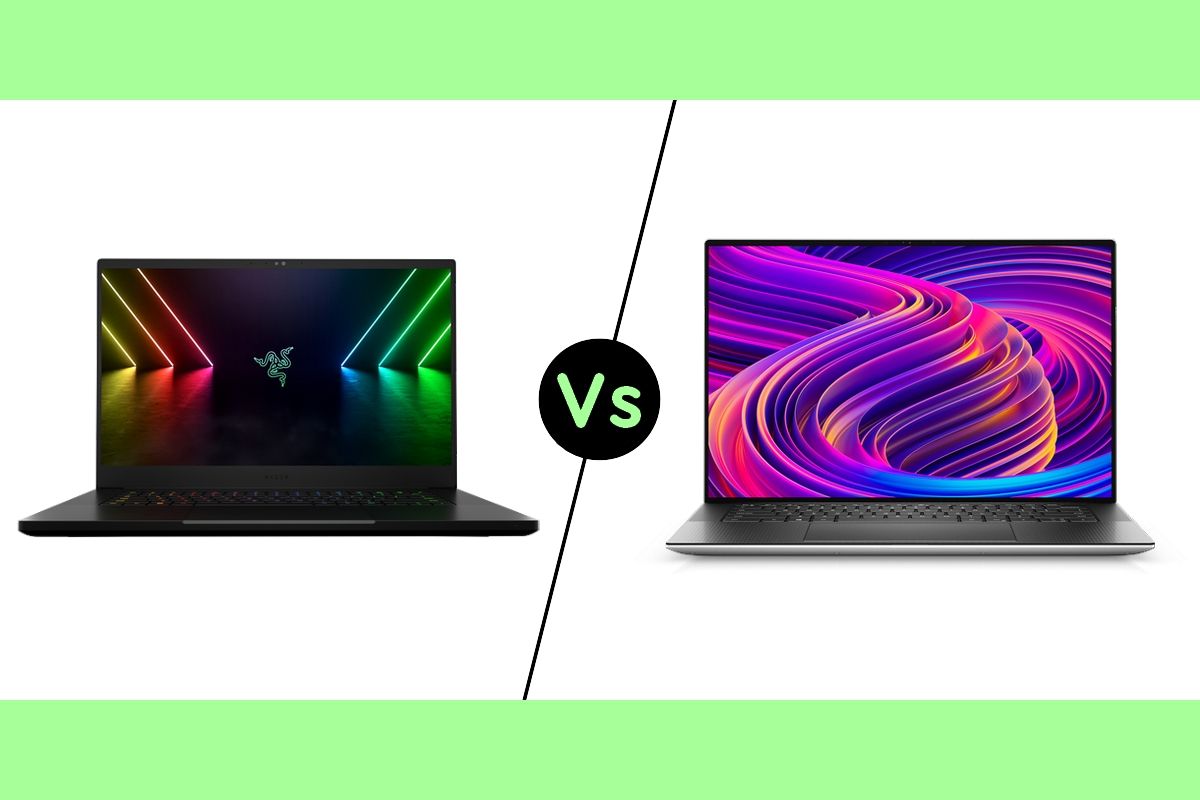
Razer modernized the Blade 15’s design in 2020, maintaining its thin profile at 0.67 inches (0.78 inches in the Base model) within an aluminum chassis, offering a sleek aesthetic suitable for both gaming and professional environments. The keyboard includes Razer Chroma per-key RGB lighting, providing a visually appealing experience without overtly leaning towards gaming or business aesthetics.

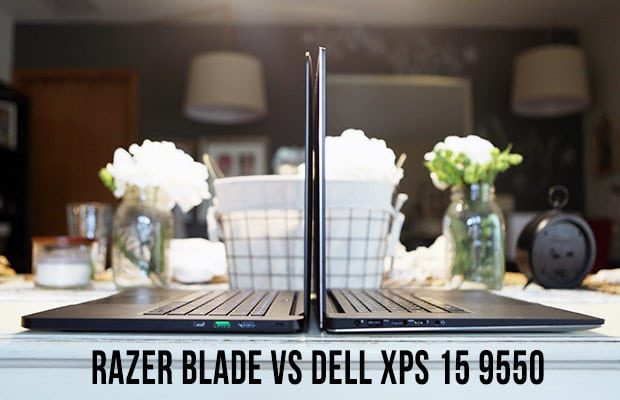
Dell’s XPS 15 9520 maintains a similar design to its predecessor, featuring a combination of machined aluminum and carbon fiber, resulting in a sturdy and comfortable notebook. Although not the thinnest or lightest at 0.73 inches and 4.62 pounds with an 86-watt-hour battery, it stands out with super-thin bezels, a top-notch keyboard, and a Microsoft Precision touchpad.

While the Blade 15 offers a more attractive appearance, and the XPS 15 is slightly smaller, both laptops are well-built, ensuring a blend of aesthetics suitable for various environments.

Connectivity

In terms of connectivity, the Blade 15 provides more ports overall, with additional USB-A and USB-C ports. However, the XPS 15 has one more Thunderbolt 4 port. Both laptops feature Wi-Fi 6E and Bluetooth 5.2, incorporating the latest standards for wireless communication.

The Blade 15’s 1080p webcam surpasses the XPS 15’s 720p version, making it a better option for videoconferencing. Both laptops support Windows 11 Hello for passwordless login through facial recognition, with the XPS 15 further including an excellent fingerprint reader in the power button. Privacy and security features are limited on both, relying primarily on Windows 11 Hello.

Performance

The Blade 15 is built around Intel’s latest 12th-generation 45-watt 14-core/20-thread CPUs, offering powerful options from the Core i7-12800H to the Core i9-12900H. Its fundamental nature as a gaming notebook is complemented by fast PCIe Gen4 SSDs, DDR5 RAM, and a range of Nvidia GeForce RTX GPUs, from the RTX 3060 to the RTX 3080 Ti.

The XPS 15 also features Intel’s 12th-generation 45-watt CPUs, including the Core i7-12700H and the ultra-fast Core i9-12900HK. With fast PCIe SSDs and high-speed RAM, it pairs with up to an RTX 3050 Ti, suitable for light gaming. Notably, the XPS 15 employs a more conservative tuning and cooling system, prioritizing quiet and cool operation over full-out gaming performance. Razer’s expertise in gaming laptop thermal management positions the Blade 15 for superior performance in demanding scenarios.

For productivity tasks and creative applications not reliant on GPU power, both laptops perform well. However, in GPU-intensive tasks such as gaming and high-end applications, the Blade

15 takes a significant lead due to its faster GPUs. Dell earns recognition for offering double the RAM at the high end, with 64GB compared to the Blade 15’s 32GB.

Display

Dell’s XPS 15 offers three 16:10 display options – Full HD+ IPS, 3.5K OLED, and 4K+ IPS panels. These displays prioritize brightness, color accuracy, and support for near-100 percent AdobeRGB gamut, catering well to professional videographers and photographers. The XPS 15’s display options, while delivering beautiful visuals, feature pedestrian 60Hz refresh rates.

In contrast, the Blade 15 focuses on gamers with display options offering refresh rates up to an impressive 360Hz. Razer provides a mix of Full HD, QHD, and 4K displays, including a QHD OLED option. The Blade 15’s QHD OLED panel runs at a fast 240Hz, making it suitable for gamers and creators seeking a no-compromise solution.

If gaming takes precedence, the Blade 15 emerges as the superior choice, despite its displays being in the older 16:9 aspect ratio. The XPS 15, with its taller 16:10 aspect ratio, excels in productivity work but features only pedestrian 60Hz refresh rates.

Portability

Both the Blade 15 and Dell XPS 15 are similarly dense and nearly equally thin, with the XPS 15 having a slight advantage in overall size due to its thin bezels. Carrying a substantial amount of power, neither laptop is particularly lightweight or backpack-friendly. They feature similarly sized batteries, with the XPS 15 having a slightly larger 86-watt-hour capacity compared to the Blade 15’s 80-watt-hour capacity. While neither laptop is likely to achieve all-day battery life, the XPS 15’s thermal tuning utility offers the potential for slightly extended longevity.

Conclusion

In conclusion, the Blade 15 stands out as a more powerful gaming and creator workstation, albeit at a higher cost. Its appealing design, superior gaming performance, and high-refresh-rate displays make it a compelling choice for gamers and demanding creators. On the other hand, the XPS 15 offers a more affordable option, making it accessible to a broader user base. If you prioritize a powerful productivity workstation with some light gaming and creative tasks, the XPS 15’s pricing and overall design may be more appealing.

Ultimately, the choice between the Dell XPS 15 and Razer Blade 15 depends on individual preferences, budget constraints, and the specific needs of the user.

Don’t forget to visit Psero’s online store to purchase your Dell XPS 15 or Razer Blade 15s Laptops today.

If you’re ready to make the leap into a new laptop, whether it’s a high-performance Dell XPS 15 or a sleek Razer Blade 15s, look no further than Psero online store. Psero is your go-to destination for top-notch laptops that cater to diverse needs.

Why choose Psero? Here are some compelling reasons:

  1. Curated Selection: Psero offers a carefully curated selection of laptops, ensuring that you have access to some of the best models on the market. Whether you’re a professional seeking powerful performance or a casual user prioritizing portability, Psero has the right laptop for you.
  2. Competitive Prices: At Psero, we understand the importance of getting value for your money. That’s why we strive to provide competitive prices on all our laptops. You can shop with confidence, knowing that you’re getting a great deal on high-quality devices.
  3. Expert Advice: Not sure which laptop is the right fit for you? Psero’s knowledgeable team is here to help. We provide expert advice and guidance to assist you in making an informed decision based on your specific requirements.
  4. Convenient Online Shopping: Say goodbye to the hassle of traditional retail. Psero’s online store allows you to browse, compare, and purchase your desired laptop from the comfort of your home. Our user-friendly interface ensures a seamless shopping experience.
  5. Secure Transactions: Your security is our priority. Psero’s online store employs robust security measures to protect your personal information and ensure a safe and secure transaction every time you make a purchase.

Don’t miss out on the opportunity to elevate your computing experience with a laptop from Psero. Visit our online store today and explore a world of possibilities. Whether you’re a student, professional, or gaming enthusiast, Psero has the perfect laptop to meet your needs. Upgrade your technology with confidence at Psero – where quality meets convenience.