When comparing laptops, most buyers look at the processor, RAM, storage and screen size. However, another display specification can significantly affect how much content you see on the screen: the aspect ratio.
You may come across laptops with 16:9, 16:10 or 3:2 displays. Although these numbers may look technical, the basic idea is simple. The aspect ratio describes the relationship between the screen’s width and height.
Understanding this difference can help you choose a laptop that feels more comfortable for studying, office work, programming, browsing, entertainment or creative tasks.
What Does Laptop Aspect Ratio Mean?
Aspect ratio describes the proportional relationship between a display’s width and height.
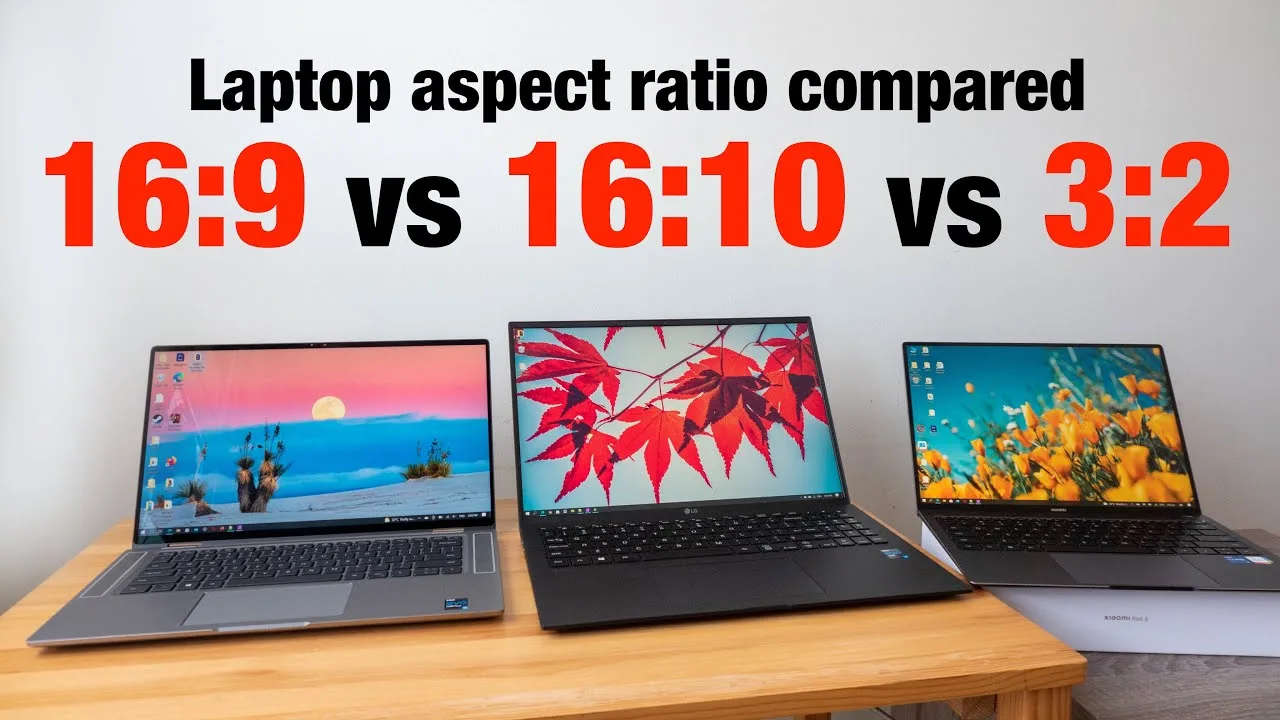
For example, a 16:9 display is wider relative to its height, while a 3:2 display is taller. Two laptops can have the same screen size and resolution but still provide a different working experience because of their aspect ratios.
What Is a 16:9 Laptop Display?
16:9 has been a very common laptop display format for many years. It is also widely used for televisions, monitors and video content.
Because many movies and online videos use widescreen formats, a 16:9 laptop can be a good choice for entertainment.
However, the shorter vertical space means you may see less content when reading long documents or webpages compared with a taller display of a similar size.
What Is a 16:10 Laptop Display?
A 16:10 display is slightly taller than a 16:9 screen. That additional vertical space can make a noticeable difference when working with documents, websites and applications.
For example, you may see more lines of a document without scrolling as frequently. Consequently, 16:10 displays can be particularly attractive to students and professionals.
What Is a 3:2 Laptop Display?
A 3:2 display is taller still. This aspect ratio is often associated with productivity-focused laptops.
The additional vertical space can be useful for reading, writing, browsing and working with documents. Nevertheless, widescreen video may show larger black bars compared with a 16:9 display.
16:9 vs 16:10 vs 3:2
| Aspect Ratio | Main Advantage | Best Suited For |
|---|---|---|
| 16:9 | Excellent compatibility with widescreen video | Entertainment and general use |
| 16:10 | More vertical workspace | Students, professionals and multitasking |
| 3:2 | Even more vertical workspace | Reading, writing and productivity |
Why Does Aspect Ratio Matter for Students?
Students often spend hours reading PDFs, researching websites, writing assignments and working with documents.
A taller display can show more content vertically. As a result, you may spend less time scrolling through long pages.
For that reason, a 16:10 or 3:2 laptop can be attractive if productivity is more important to you than watching widescreen movies.
Is 16:9 Still a Good Choice?
Absolutely. There is nothing wrong with buying a 16:9 laptop in 2026.
It remains a practical format for everyday computing and is especially convenient for people who watch a lot of widescreen video.
Furthermore, many affordable and UK used laptops use 16:9 displays, giving Nigerian buyers plenty of options at different price points.
Which Aspect Ratio Is Better for Office Work?
For spreadsheets, documents, email and web browsing, the extra vertical space of a 16:10 or 3:2 display can be useful.
However, the difference should be considered alongside screen size. A high-quality 16:9 display can still be more comfortable than a smaller display with a taller aspect ratio.
What About Gaming?
Gaming compatibility depends on the games and hardware you use. Many games are designed around widescreen formats, making 16:9 a familiar choice.
Some modern games support wider or taller aspect ratios, but compatibility can vary. Therefore, gamers should check the games they actually play before choosing a display format.
What About Watching Movies?
16:9 is generally convenient for widescreen video because it matches the format used by much modern video content.
On taller displays such as 3:2, videos may leave more unused space above and below the picture depending on the video’s aspect ratio.
Aspect Ratio Is Not the Same as Screen Size
A common mistake is assuming that aspect ratio tells you how physically large a screen is. It does not.
Screen size is measured diagonally, while aspect ratio describes the shape of the display. Therefore, two 14-inch laptops can have noticeably different screen proportions.
Other Display Specifications Still Matter
Do not choose a laptop based on aspect ratio alone. Also check:
- Screen size
- Resolution
- Brightness
- Refresh rate
- Panel technology
- Colour accuracy
- Anti-glare coating
These specifications work together to determine the overall quality of the display.
Which Aspect Ratio Should You Choose?
| User Type | Good Choice |
|---|---|
| Student | 16:10 or 3:2 |
| Office Professional | 16:10 or 3:2 |
| Writer | 16:10 or 3:2 |
| Programmer | 16:10 or 3:2 |
| Movie Lover | 16:9 |
| General User | 16:9 or 16:10 |
| Gamer | 16:9 or supported alternative |
What Should UK Used Laptop Buyers Check?
If you are buying a UK used laptop, inspect the actual display rather than relying only on the advertised screen size.
Check for dead pixels, scratches, brightness problems, flickering and unusual colour changes. Also make sure the screen hinge remains firm when you adjust the display.
In addition, verify the laptop’s exact model number. This allows you to confirm the manufacturer’s original display specifications before completing your purchase.
Related PSERO Guides
- HD vs Full HD vs 2K vs 4K Explained
- What Is a Laptop Refresh Rate?
- How to Tell If a Laptop Has a Good Display
- 13-inch vs 14-inch vs 15.6-inch Laptops
- How to Test a Used Laptop Before Buying
Shop Laptops at PSERO
Useful Official Resources
For detailed display specifications, check the official product information provided by manufacturers such as HP, Dell, Lenovo and ASUS.
Final Verdict
Aspect ratio can have a surprisingly large effect on how comfortable a laptop feels. A 16:9 display remains excellent for general computing and entertainment, while 16:10 and 3:2 screens provide additional vertical space for productivity.
Ultimately, the best choice depends on what you do most often. If you spend your day reading, writing or working with documents, a taller display may be worth considering. If entertainment and widescreen video are more important, 16:9 remains a practical option.